
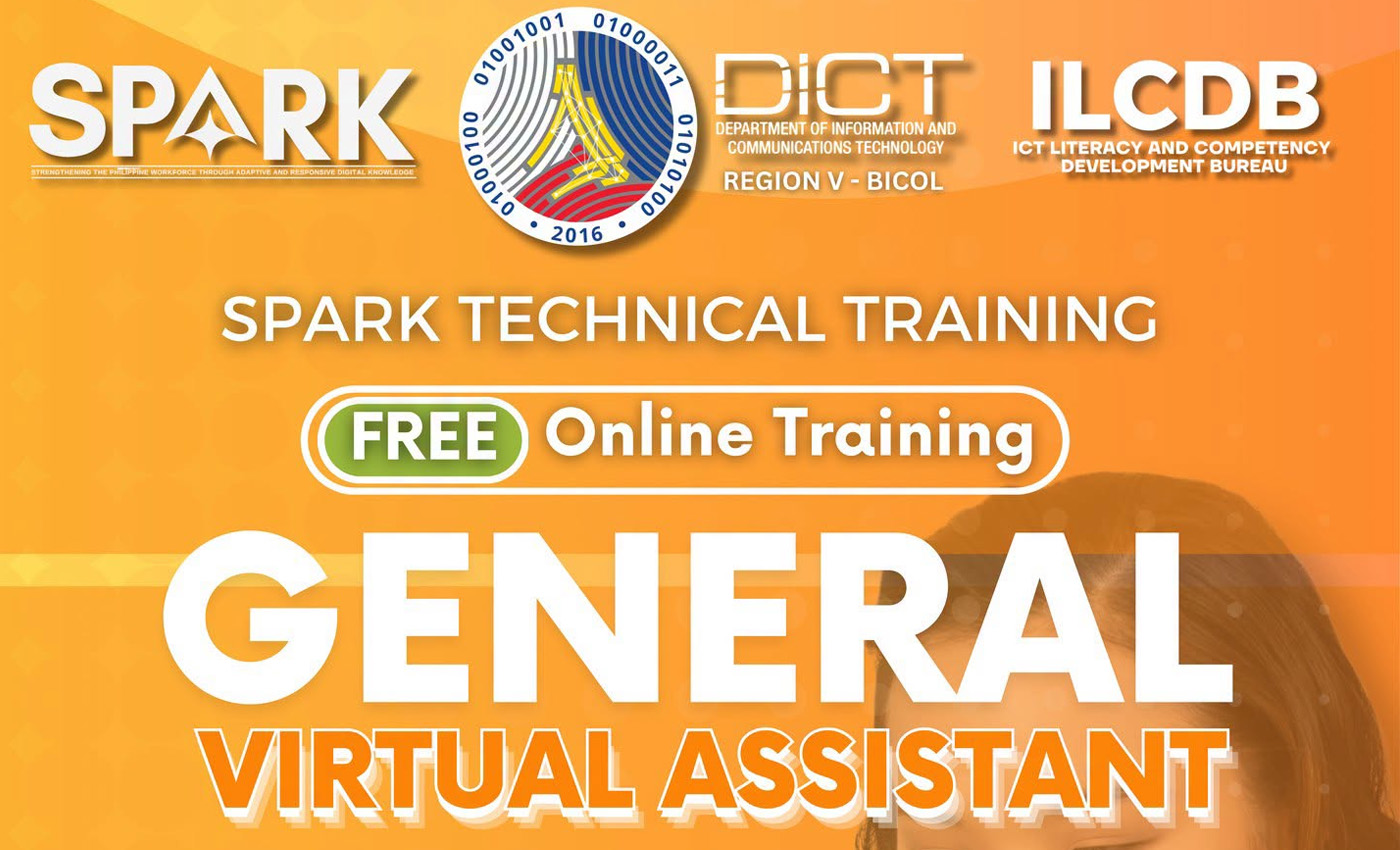
Are you interested in becoming a Virtual Assistant (VA) but don’t know where to start? The Department of Information and Communications Technology (DICT) offers free digital skills training that can help Filipinos develop skills for online work.
The program previously known as DigitalJobsPH is now called SPARK, or Strengthening the Philippine Workforce through Adaptive and Responsive Digital Knowledge. One of its current training courses is General Virtual Assistance 2.0: A Paradigm Shift in AI-Powered Interaction.
The training is designed to help participants build practical digital skills that can be used for online freelancing, remote work, and other opportunities in the digital economy.
If you want to join the DICT free Virtual Assistance training, this guide explains the qualifications, training process, and how you can apply.
What Is DICT Free Virtual Assistance Training?
The DICT’s Virtual Assistance training is part of its SPARK program, which provides digital skills training to help Filipinos participate in the growing digital economy.
The current training course is called General Virtual Assistance 2.0, and the program describes it as a training focused on AI-powered interaction. It is included among the technical training courses offered through the SPARK program.
The program evolved from DigitalJobsPH, a DICT initiative that provided technical training for aspiring online freelancers. In 2024, DigitalJobsPH was rebranded as SPARK.
The goal is not simply to teach participants about Virtual Assistance. The broader objective is to equip Filipinos with digital skills that can help them pursue employment, freelancing, and other opportunities online.
Is the DICT Virtual Assistance Training Free?
Yes. The training is offered as part of the DICT’s government digital-skills development program, so qualified participants selected for a training batch do not pay tuition for the DICT training itself.
However, applicants should understand that registration does not automatically guarantee admission. Training batches have limited slots. The current SPARK training process states that each technical training can accommodate a maximum of 25 trainee-scholars.
Because training schedules, locations, target sectors, and selection requirements may vary by DICT regional office and batch, applicants should always check the latest announcement from their local DICT office.
What Is General Virtual Assistance 2.0?
General Virtual Assistance 2.0 is one of the technical courses currently listed under the DICT SPARK program.
The course is designed around the changing requirements of online work and incorporates an AI-focused approach. It is intended for individuals who want to develop skills relevant to the virtual assistance and online freelancing industry.
The SPARK program also offers other digital-skills courses, including:
- Social Media Marketing 2.0
- Graphics Design with PSD and AI
- Graphics Design using Canva
- AI-Powered WordPress Website Development
- General Transcription
- Search Engine Optimization with AI
- AI-Powered Freelancing
- AI Video Editing with CapCut
- Data Analytics
- Mobile Application Development
- AI Literacy
- Digital Marketing and other specialized ICT courses
The courses available to applicants may depend on the training batch and the target beneficiaries identified by the regional office.
DICT Virtual Assistance Training Qualifications
One important thing to remember is that there is no single set of qualifications that applies to every SPARK training batch.
DICT’s current SPARK training manual identifies several target beneficiary groups. These include the general public and special sectors.
Common Requirements for DICT Virtual Assistant Training
The exact requirements can vary depending on the DICT regional office and the specific batch.
For example, a previous DICT Cavite General Virtual Assistance training announcement required applicants to be Filipino citizens, at least 18 years old, have a laptop or desktop computer, have a stable internet connection, commit to the entire training period, possess basic English speaking and writing skills, and be computer/internet literate.
Because that announcement was for a specific 2023 training batch, these requirements should not be treated as universal 2026 requirements.
Instead, applicants should look for the current announcement for their area.
Depending on the batch, applicants may be asked to provide information such as:
- Full name and contact information
- Proof of identity
- Educational or employment information
- Sector or beneficiary category
- Computer and internet availability
- Previous digital skills or experience
- Other information requested in the registration form
Some batches may also require applicants to complete a pre-assessment test. The current SPARK training process specifically mentions registration forms that include pre-assessment tests and other necessary documents.
How to Apply for DICT Free Virtual Assistance Training
The application process may differ depending on the DICT regional office conducting the training.
However, the general process usually follows these steps:
Step 1: Check for an Official SPARK Training Announcement
Look for an announcement from DICT or your local DICT regional/provincial office.
Training is organized by regional offices and Digital Transformation Centers, so there may not be one nationwide application form available at all times.
The SPARK training process indicates that regional focal persons and center managers plan training schedules, courses, and target sectors before registration materials are released.
Step 2: Check the Course Offered
Make sure the announcement specifically includes General Virtual Assistance 2.0 if that is the course you want.
Other SPARK courses may also be offered in your area.
Step 3: Read the Qualifications Carefully
Before submitting your application, check whether you belong to the target sector for that particular batch.
For example, a training batch could prioritize:
- Women
- PWDs
- Out-of-school youth
- Former OFWs
- Students
- MSMEs
- Job seekers
- Near-hire individuals
The target sector can change depending on the training activity.
Step 4: Complete the Registration Form
DICT’s SPARK training process includes the preparation of registration forms and pre-assessment tests as part of the training design phase.
Complete the form accurately and provide the information requested by the regional office.
Avoid submitting multiple applications unless the announcement specifically allows it.
Step 5: Take the Pre-Assessment or Screening
Some training batches may use a pre-assessment or other screening process to help select participants.
The current SPARK process specifically includes pre-assessment tests in its registration materials.
Because slots are limited, completing the application does not necessarily mean that every applicant will be selected.
Step 6: Wait for the Selection Announcement
Selected applicants will receive instructions from the organizing DICT office.
Pay close attention to your email, phone, Facebook page announcements, or other communication channels specified in the application form.
Step 7: Attend the Orientation
Selected trainee-scholars are expected to participate in an orientation before the training proper.
DICT’s current SPARK process states that the orientation introduces the program team, resource persons, and trainee-scholars and explains the expectations for the training.
Step 8: Complete the Training
The training may be conducted at a Digital Transformation Center (DTC) or through other arrangements.
According to the current SPARK process, training is normally conducted at DICT Digital Transformation Centers, but partnerships with LGUs and other stakeholders, as well as online or hybrid arrangements, may be used when appropriate.
Step 9: Complete the Assessment and Other Requirements
The training does not necessarily end on the final instructional session.
The current SPARK process includes an assessment phase following the online campaign and an evaluation process.
Participants should therefore be prepared to complete the activities and requirements specified by their training batch.
Step 10: Receive Your Certificate
Participants who successfully complete the required training and assessment activities may receive documentation or a certificate of completion, depending on the specific program implementation.
A certificate can be useful when building a professional profile, portfolio, or resume for online work.
Final Thoughts
The DICT Free Virtual Assistance Training is an opportunity for Filipinos who want to develop digital skills for online work and freelancing.
While the program was previously widely known as DigitalJobsPH, applicants in 2026 should look for DICT SPARK announcements and the current General Virtual Assistance 2.0 course.
The most important step is to monitor your local DICT office for a new training batch. Check the announced qualifications, complete the official registration form, take any required assessment, and be prepared to commit to the entire training program.
With virtual assistance becoming an increasingly digital and AI-assisted field, learning how to use online productivity tools, communication platforms, research tools, social media, and AI-powered technologies can help you build a stronger foundation for remote work.
Always verify the latest application details directly with DICT before submitting your personal information or documents.